Situated on the West coast of South America where you find the Pacific Ocean and just below Ecuador, you’ll find Peru. It’s southern neighbour is Bolivia and Brazil is on its east.
We stayed in the Barranca district next to Miraflores. I am told this was once the district of summer houses, and where the wealthy retreated from the city to be near the sea.
Our hotel was like a summer residence, with two properties repurposed into a boutique hotel of around 20 rooms. It is called Villa Barranca.


The rooms here are very individual, with quirky art and furniture which give character to this delightful hotel. The manager Isaac could not do enough for us.


In the Barranco district, there are shops, galleries and fabulous places to eat, especially on Domeyer Street, now probably the trendiest culinary streets you’ll find.


Miraflores is upmarket, and you can see why.
It’s modern, with offices and shops. There is a sense of working class here with quality products in the stores, but a security guard on every door.
Unlike in the UK, you see the police everywhere, but this is because of the city’s notorious crime rate. Add to this the fact that everyone tells you to watch your belongings, not to go to certain areas, and to remove any valuables so as not to draw attention to yourself, and you start to get the idea.
It barely rains here either, so it can be humid at times. It never truly rains in Lima, Peru, in the traditional sense; instead, the city gets a fine, wet mist called garúa.
Real, heavy rainfall is extremely rare—occurring only during strong El Niño events—with the last significant downpour in 1974.
Peru is in a state of political turmoil right now, with recent elections between 36 different political parties. But in June, they have a final vote between the socialist far left and an accused corrupt government.
Outside the Presidents palace there are barriers and riot police… it paints the image of an unsettled country and when we talk to our guides they confirm that the people are not happy.


From here, we visited a food market and walked through the city, noting the colonial architecture and the strong Spanish influence from when Francisco Pizarro and the Spanish invaded Peru in search of gold.
We crossed the square where the presidents place is. There were barriers and police around, some with riot gear to hand.
From here we visited the beautiful Cathedral with reference to Francisco Pizzaro.
Despite this lack of rain .. markets are filled with every colour.


An interesting fact that I didn’t know is that there were only 14 Incas. The people were Chincero, collectively known as the Incas; as we might say, we have an English monarch, and we who live in the UK are English.
The 14 Incas ruled for hundreds of years before their downfall by the Spanish.
We were taken to the Larco Museum containing pre Hispanic objects and erotic art. We also visited a colonial mansion from the 15th century given by Pizzaro to one of his captains, Jeronimo de Aliaga. The house still belongs to the same family to this day.


Whilst the roads lack pot holes and public gardens and parks are well kept, there are traffic jams everywhere.
But Lima is the capital and has some of the best food in the world and I can confirm this from our own dining experiences here.
The art, museums and culture tell of a clever civilisation of the past and a vibrant and stimulated people today.
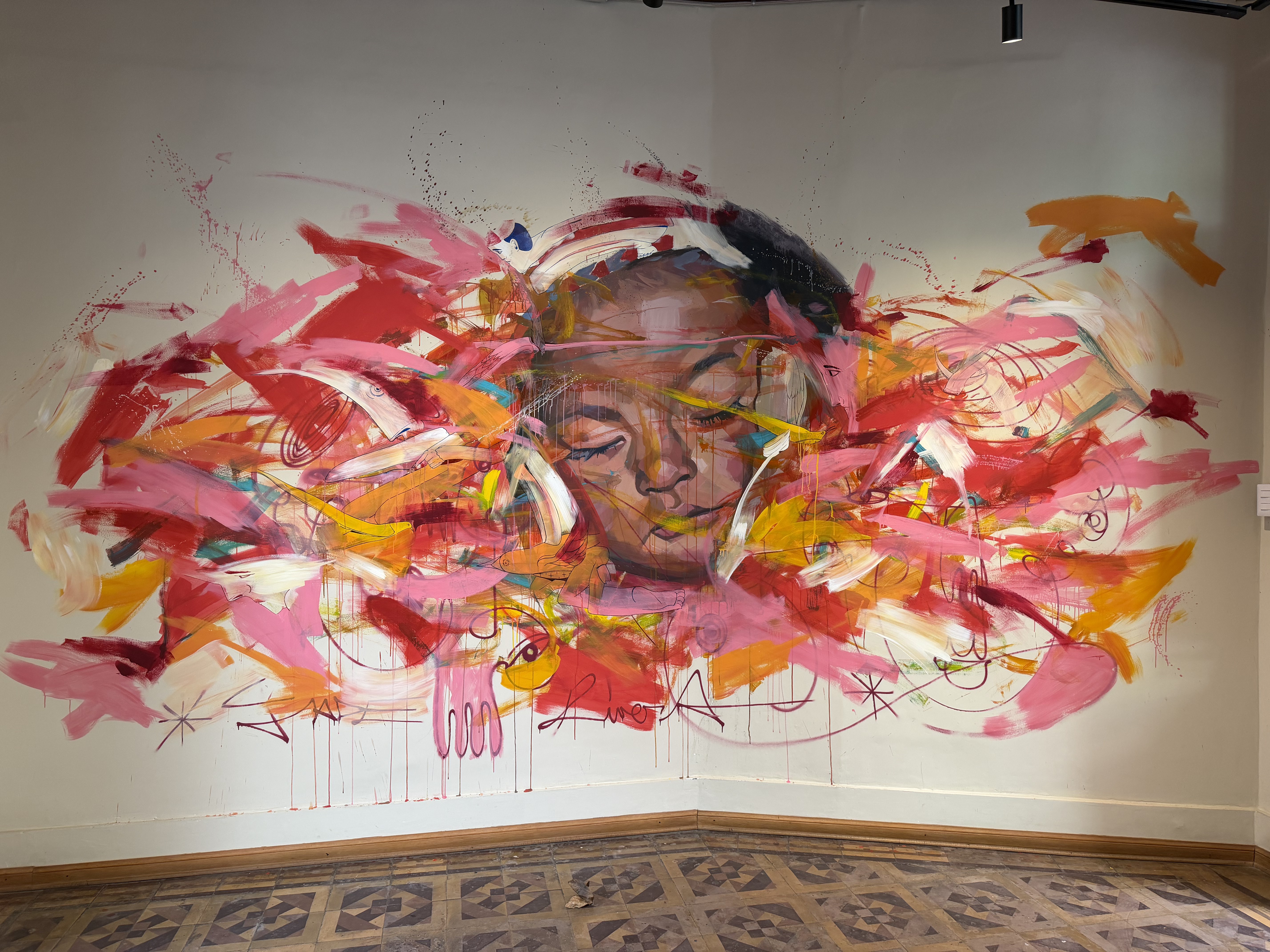
Whilst not my taste at this point, we visited the Jade Rivera art gallery. A former graffiti artist whose work appears influenced by Picasso… but more about him and his art later.
When I first saw his work, I was really uncomfortable with the Picasso-style work, but we later returned to see the Jade Rivera lab, which shows his latest work and experiments. The work is amazing and justifies why he receives commissions all over the world.
All in all Lima is huge and too big to completely understand or visit every district.